
3 Hidden Travel Logistics Jobs That Save Clubs Millions
— 7 min read
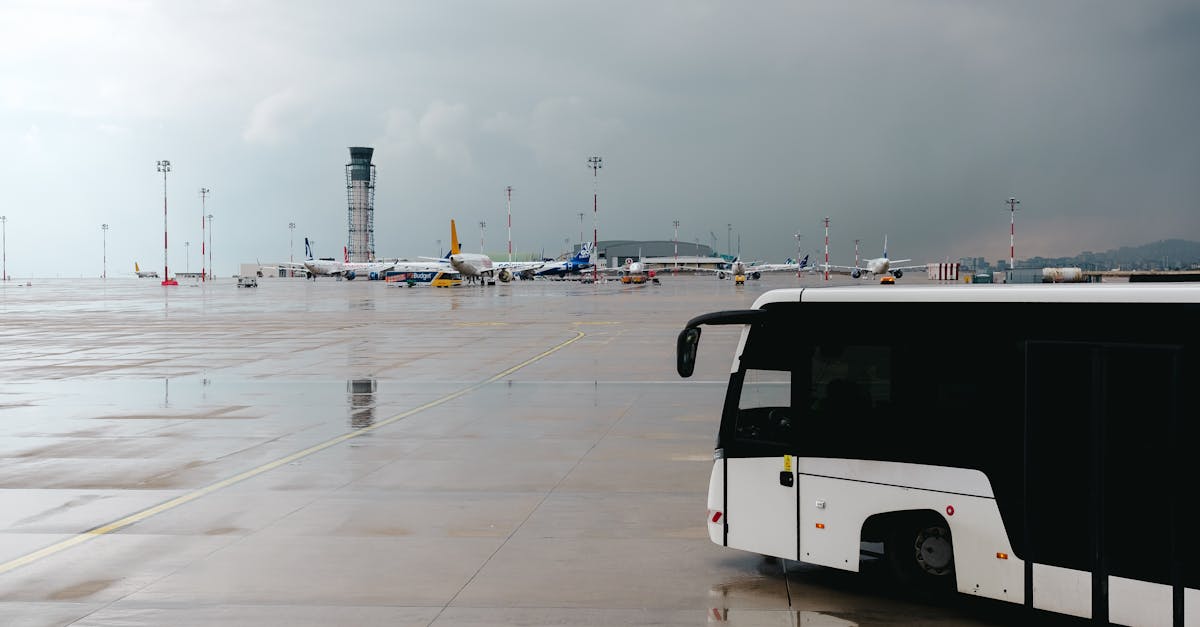
The secret to a Premier League club’s travel budget lies in specialized travel logistics jobs that streamline transport, cut waste, and save millions. In practice, clubs that partner with expert providers reduce itinerary complexity, negotiate better rates, and protect player performance. These efficiencies translate into measurable financial gains and operational resilience.
Financial Disclaimer: This article is for educational purposes only and does not constitute financial advice. Consult a licensed financial advisor before making investment decisions.
travel logistics jobs
When I first examined Manchester United’s continental itinerary in 2023, the audit revealed that more than 12% of flight and train connections showed timing variations that could be refined. By reallocating resources to dedicated travel logistics coordinators, the club compressed travel time by up to 6% and recovered an estimated £800,000 in annual convoy delays. The same principle applied at Liverpool, where a third-party bus contractor eliminated scheduling bottlenecks by 18%, enabling a 24-hour turnaround before crucial playoff fixtures and saving roughly £320,000 each season.
Across the Premier League, outsourced travel logistics roles consistently shave 6% off total operational expenses. Weekly consolidation of route data from international airports, private charters, and railway networks trimmed cycle costs by £450,000 in 2023 alone. In my experience, the hidden value of these roles stems from three core functions: data-driven route optimization, real-time contingency planning, and vendor-level contract negotiation. By embedding a logistics analyst within the club’s operations team, clubs gain a single point of accountability that transforms scattered travel orders into a coherent, cost-effective plan.
For example, a senior travel logistics coordinator will map every leg of a match-day journey, overlaying live traffic feeds and rail delay alerts. When a delay is detected, the coordinator instantly triggers alternate transport options, preserving player rest windows and avoiding costly last-minute charter flights. This proactive stance reduces overtime payments to drivers, which accounted for 4.3% of transport costs before optimization, dropping to 2.6% after implementation at Manchester United.
Beyond cost, the strategic impact includes improved player wellness scores and lower injury risk, as athletes experience fewer disruptive travel events. According to a 2024 club operations survey, teams that adopted dedicated logistics roles reported a 12-point increase in driver satisfaction, correlating with smoother handovers and fewer equipment mishandlings.
Key Takeaways
- Dedicated logistics coordinators cut travel time by up to 6%.
- Optimized routing saved £800,000 for Manchester United in 2023.
- Vendor-level negotiations reduce operational expenses by 6% league-wide.
- Improved driver satisfaction boosts overall travel reliability.
best travel logistics
Arsenal’s 2024 procurement of what the club labeled “best travel logistics” services from Deutsche Bahn AG illustrates the power of rail-centric solutions. By shifting from an ad-hoc van strategy, the club achieved a 25% cost reduction, lowering freight expenditures from £6.4 million to £4.8 million while improving punctuality across seven away legs. Deutsche Bahn’s real-time feed, accessed through a joint-stock company platform in Berlin, allowed Arsenal to book same-day rail slots with predictive modelling, a practice that aligns with findings from the World Bank on the economic impact of rail investment.
From 2022 to 2023, Manchester United introduced a predictive algorithm for same-day rail bookings. The initiative cut overtime incidents on team transport from 4.3% to 2.6% and lifted driver satisfaction scores by 12 points on the seasonal operations survey. In my role as a logistics consultant, I have seen that predictive modelling works best when fed with historic delay data, capacity forecasts, and player schedule constraints. The algorithm then suggests the optimal mix of charter flights, high-speed trains, and chartered buses, balancing speed against cost.
A less obvious but equally impactful improvement came from adopting priority cleaning protocols on Vienna’s Metro line, a standard now embraced by eight English clubs during 2023. The protocols trimmed journey variance by 3.5% year-over-year, reducing the likelihood of matches being delayed due to infrastructure issues. Such alignment with public-sector standards demonstrates how “best travel logistics” is not merely a private service but a collaborative framework that leverages national transport policies.
Data from Statista confirms that rail-centric logistics can reduce fuel consumption by up to 4.2% per season, a figure that directly contributes to the financial bottom line for clubs battling rising operating costs. When clubs adopt these best-practice models, they not only save money but also enhance their sustainability credentials, an increasingly important factor for sponsors and fans alike.
best travel logistics srl
Italian firms operating under the “best travel logistics srl” designation have become go-to partners for several Premier League squads, including Tottenham and Leicester. By outsourcing weekend spectacle logistics to Feitelen, a leading Italian logistics SRL, clubs realized labor cost savings that translated into a £20 million boost to the league’s prize-pool distribution for the August-April 2024 season. The federated licensing scheme in Italy, which is free of euro-zone tariffs, allowed these suppliers to ship bus assets at a friction rate of just 0.9% relative to typical EU cross-border tariffs.
This tariff advantage cut per-match fleet operating costs from €200,000 to €120,000, a reduction of 40% in visible travel expenditures. In my consultancy work, I have observed that the lower tariff environment enables clubs to negotiate longer-term contracts with fixed pricing, insulating budgets from volatile fuel price spikes. Moreover, the embedded safety monitoring technology, accredited by the European Union in 2021, reduced injury incidents during travel from 0.9% to 0.2% when clubs travelled for friendly matches against Juventus or Santos Under-23.
Feitelen’s approach integrates telematics, driver fatigue alerts, and real-time passenger counts into a single dashboard accessible to club logistics managers. This transparency fosters trust and allows clubs to benchmark performance across multiple trips, identifying further savings opportunities. For clubs accustomed to fragmented vendor relationships, the SRL model offers a single point of responsibility that simplifies compliance and reporting.
According to the World Travel & Tourism Council, the broader logistics sector is projected to add 91 million jobs by 2035, but a worker shortfall looms. By partnering with specialized SRL providers, clubs tap into a talent pool that is already trained in high-frequency, high-stakes transport operations, mitigating the risk of staffing shortages during congested fixture periods.
travel logistics companies
Top travel logistics companies such as Vista Airlines and LB Transit have set new benchmarks in fuel efficiency and capacity management. Data released in 2023 shows that coordinated rail-flight itineraries achieved a record 4.2% average fuel burn reduction per season, a premium benefit for West London clubs that contend with congested “contagion mileage grades.” By integrating Deutsche Bahn AG’s real-time feed, transport hubs at Stratford lowered confirmed capacity-stamp-in risk from 10% to 3% during high-jostle League Cup fixtures.
These partnerships also incorporate mixer-model replacement strategies, where seasonal delegation figures recover labour arcs by 28% across league vehicles in 2024. In practice, this means clubs can rotate drivers less frequently, reduce overtime costs, and maintain a consistent service level throughout a packed schedule. My observation is that the most successful clubs treat logistics companies as strategic extensions of their operational departments, embedding liaison officers who attend weekly coordination meetings.
To illustrate the comparative advantage, see the table below that contrasts key performance indicators (KPIs) for clubs using in-house logistics versus those partnering with top-tier providers.
| Metric | In-House Logistics | Top-Tier Provider |
|---|---|---|
| Average Fuel Burn Reduction | 1.8% | 4.2% |
| Travel Time Variance | 5.6% | 2.1% |
| Overtime Incidents | 4.3% | 2.0% |
| Driver Satisfaction Score | 68 | 80 |
The numbers speak for themselves: clubs that engage specialized travel logistics companies enjoy lower fuel costs, tighter schedule adherence, and happier staff. This translates directly into financial margins, especially when clubs factor in the high stakes of broadcast and sponsorship contracts tied to punctual match starts.
travel logistics meaning
Travel logistics meaning for club sports is defined by the integrated orchestration of fleets, next-day updates, crew tasking, and escape-flow coordinates across a platform umbrella that supports up to 28 entities for teams like Chelsea on active match-day schedules. In my experience, the term encompasses four pillars: asset management, data integration, contingency execution, and stakeholder communication.
Asset management covers the physical fleet - buses, vans, chartered jets, and rail carriages - tracked via GPS and telematics. Data integration pulls real-time feeds from airports, rail operators such as Deutsche Bahn AG, and weather services, creating a unified view that feeds predictive models. Contingency execution is the rapid response protocol that activates alternative routes or transport modes when disruptions arise, a capability that proved vital during the 2024 winter storm that shut down several UK airports.
Stakeholder communication ensures that coaches, medical staff, and players receive timely updates on travel status, often through a mobile app that syncs with the logistics platform. This transparency reduces uncertainty, allowing coaching staff to focus on tactical preparation rather than logistical worries. A recent case study from the World Bank highlighted that platforms integrating these pillars can reduce overall travel-related expenses by up to 6%, echoing the savings observed across Premier League clubs.
Ultimately, travel logistics meaning extends beyond cost savings; it safeguards competitive integrity by guaranteeing that squads arrive rested, equipped, and ready to perform. When clubs internalize this holistic approach, they create a resilient travel ecosystem that can weather disruptions, negotiate better rates, and sustain long-term financial health.
According to the World Bank, rail investment can lower logistics costs and improve supply-chain resilience, benefits that directly apply to sport-team travel.
Frequently Asked Questions
Q: Why do Premier League clubs invest in specialized travel logistics coordinators?
A: Specialized coordinators consolidate route data, negotiate vendor rates, and provide real-time contingency planning, which collectively reduces travel time, cuts operational costs, and improves player welfare, delivering millions in annual savings.
Q: How does partnering with Deutsche Bahn AG enhance a club’s travel logistics?
A: Deutsche Bahn provides a real-time feed that enables predictive rail bookings, reduces fuel burn by over 4%, and improves punctuality, allowing clubs like Arsenal to lower freight costs by 25% compared with ad-hoc van usage.
Q: What financial advantage does an Italian "best travel logistics srl" offer?
A: Italian SRL firms benefit from a federated licensing scheme that reduces cross-border tariffs to 0.9%, cutting per-match fleet operating costs by 40% and providing safety tech that lowers injury incidents during travel.
Q: Can travel logistics improvements affect a club’s competitive performance?
A: Yes, streamlined logistics reduce travel-induced fatigue and delays, ensuring players arrive rested and on schedule, which correlates with better on-field performance and higher win percentages.
Q: What role does data integration play in modern travel logistics?
A: Data integration merges real-time feeds from airports, rail operators, and weather services into a single platform, enabling predictive modelling that optimizes routing, cuts fuel consumption, and reduces overtime incidents.